The three stars
Rigil Kentaurus
- Type
- G2V, like the Sun
- Size
- 1.22 × the Sun
- Mass
- 1.10 × the Sun
- Brightness
- 1.5 × the Sun
- Surface
- ≈ 5,790 K
Toliman
- Type
- K1V, orange
- Size
- 0.86 × the Sun
- Mass
- 0.91 × the Sun
- Brightness
- 0.5 × the Sun
- Surface
- ≈ 5,260 K
Proxima Centauri
- Type
- M5.5Ve red dwarf
- Size
- ≈ 0.15 × the Sun
- Mass
- ≈ 0.12 × the Sun
- Brightness
- ≈ 0.0016 × the Sun
- Surface
- ≈ 3,040 K
The planets
Proxima b
- Year
- 11.2 days
- Distance from star
- ≈ 0.049 AU
- Mass
- at least ≈ 1.1 Earths
- Found
- 2016, wobble (HARPS)
Proxima d
- Year
- 5.1 days
- Distance from star
- 0.029 AU
- Mass
- at least 0.26 Earths
- Found
- 2022, wobble (ESPRESSO)
S1
- Year
- ≈ 2–3 years (model)
- Distance from star
- ≈ 1–2 AU
- Mass
- ≈ Saturn (estimate)
- Seen
- Aug 2024, Webb image
A third Proxima signal, "c", reported in 2020, remains unconfirmed and is not drawn. Masses from the wobble method are minimums, because the orbit's tilt is unknown.
What the telescopes actually see
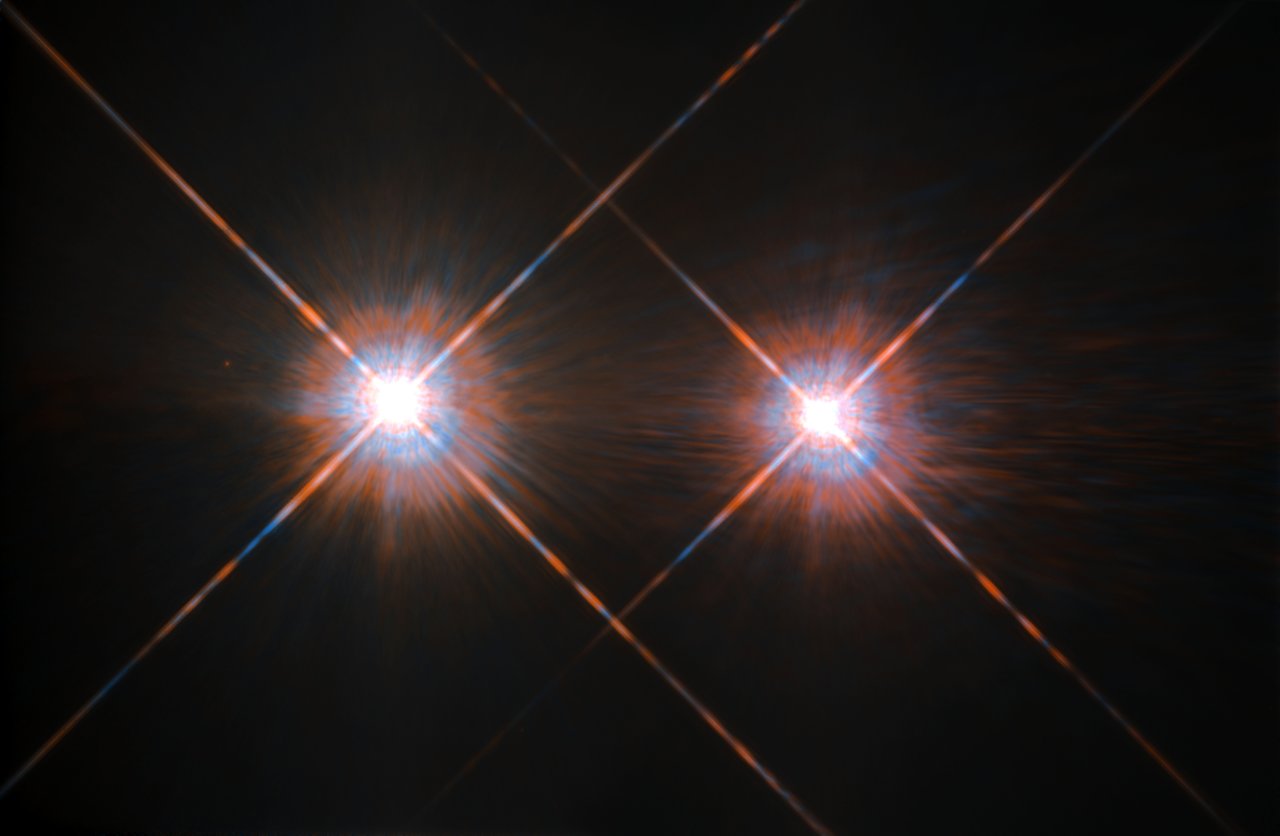
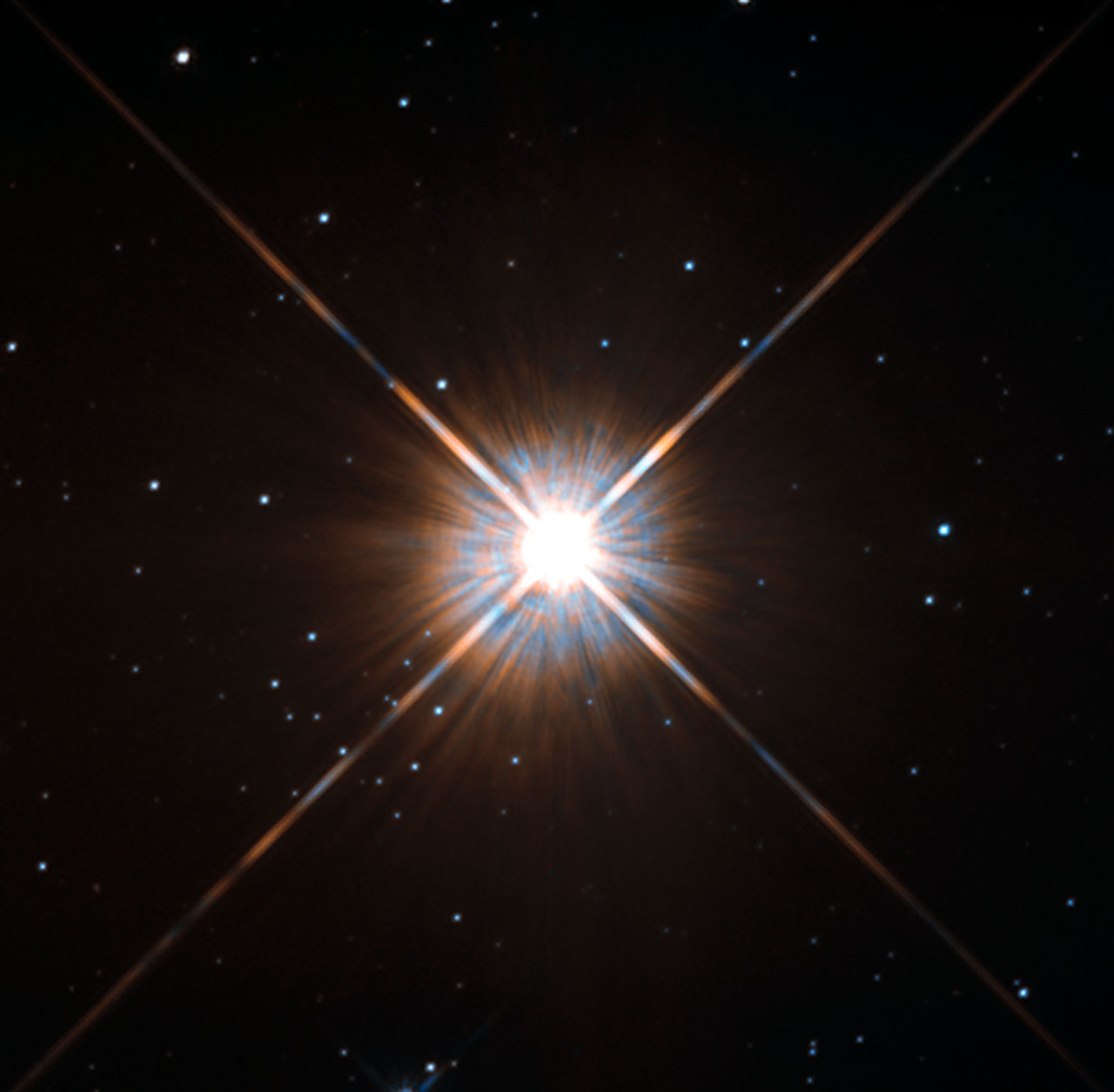
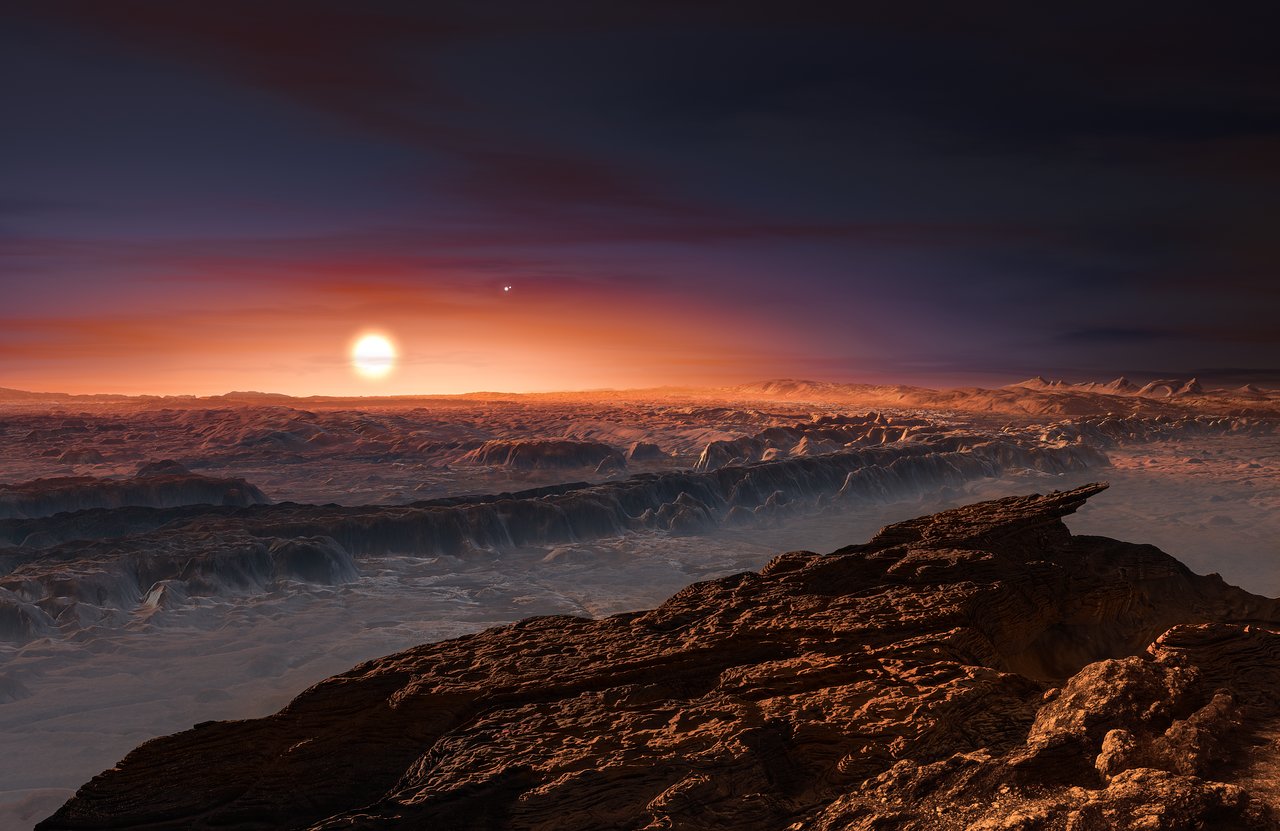
Webb's own images of the S1 search, from glare to the masked view to the candidate dot, are on NASA JPL's release.
How we know
The wobble
Proxima b and d have never been seen. They tug their star back and forth by less than a metre per second, and spectrographs such as ESPRESSO on ESO's Very Large Telescope measure that shift in the star's light. That gives each planet's year and a minimum mass.
Blocking the glare
S1 was found the hard way: Webb's mid-infrared camera hid Alpha Centauri A behind a mask, then subtracted models of both stars' light. A faint dot remained. It was missing in two later looks, which orbit models say can happen if the planet swung close to its star.
Sources
- Positions and catalogue values: HYG Database v4.1 (CC BY-SA 4.0).
- A–B orbit (≈ 79.8 years, 23.3 AU, e ≈ 0.52) and star properties: Alpha Centauri summary and the references it cites.
- Proxima b mass and confirmation: University of Geneva, ESPRESSO result.
- Proxima d: Faria et al. 2022, A&A.
- S1 candidate: NASA JPL, Aug 2025.
- Habitable zones are a simple estimate from each star's brightness (√L × 0.95 to 1.67 AU), shown as a guide.